Posts Categorized: News

Discussing Finances With Aging Parents

How to Speak to an Aging Parent About Finances

two people talking and pointing at a computer screen

Although it may seem uncomfortable, talking to your aging parents about finances and estate planning is vital—doing so allows you to be fully prepared to manage their financial situation if they become incapacitated or when they pass away.

While you most likely want to protect your parents’ assets and support their retirement plans, you don’t want them to feel you are trying to take away their independence. Learn how to tactfully approach a potentially difficult conversation, successfully plan for your parents’ future, and manage their finances.

Understanding the Importance of Financial Discussions

Even if your parents are still healthy and independent, being informed about financial and legal matters will be beneficial should you ever need to assist them with managing their money.

The Need for Financial Transparency

The financial realities associated with aging, death, or dying are unpleasant to think about, but delaying this conversation with your parents could be costly.

In the United States, the annual median cost for long-term care ranged from $24,700 to $116,800 in 2023, depending on the service. As they move through life’s transitions, older adults may eventually need services such as a nursing home or at-home care. Without adequate planning, many families are unable to pay for these costs out-of-pocket.

By having an open conversation with your parents about their financial status, you can plan for exactly how these expenses will be covered. Doing so also helps ensure your parents’ well-being is cared for in the future.

An additional benefit of gaining transparency into financial and medical matters is that in the event of an emergency, you have peace of mind that the necessary precautions and paperwork are in order.

Recognizing Aging Parent Needs

Along with planning ahead, you should consider your aging parents’ current financial needs. Older adults experience many challenges, such as feeling uncertain about financial decisions or confused by their bills and brokerage statements.

Additionally, older adults are more likely to fall victim to online scams. In 2023, about $3.4 billion in fraud losses were reported by those over 60. As your parents might not be aware of modern phishing tactics, they may not pick up on what you would view as an obvious scam.

Adult children can offer their mothers and fathers much-needed support while they navigate the complexities of aging. Whether your parents have admitted it or not, there is a possibility that they may need you to step in.

When to Begin Financial Conversations

It’s common for older adults to be reluctant to ask for help. Your parents may be concerned about losing their independence or fear they may be a burden. It can also be tricky for adult children to know when it’s appropriate to have a financial conversation with their parents.

These signs could mean your aging parents need assistance with their finances:

  • Strange purchases: Be aware if your parents purchase items out of character or suddenly participate in contests or sweepstakes.
  • Unopened piles of mail: This can be an indicator that your parents are behind on their bills.
  • Money complaints: This can range from hinting that they don’t have enough money to not participating in activities that they feel are too expensive.
  • Physical ailments: Arthritis and fading vision can make it difficult for your parents to perform tasks like driving to the bank.
  • Memory problems: These can range from not remembering whether a bill was paid to losing track of cash.

Strategies for Effective Communication

A combination of care, concern, and curiosity is most likely why you want to ask your parents about their finances and estate plans. No matter how good your intentions are, approach the subject delicately. Being kind and understanding can help reassure your parents that you aren’t prying or being greedy.

Building Trust and Empathy

Before starting any financial discussion with your parents, it is critical to consider their point of view. Doing so will help you empathize and ensure you are better equipped to tend to their needs and emotional responses.

In addition to having likely grieved the death of many friends and family, your aging parents may be mourning the loss of their physical abilities and independence. Many older adults view giving up their financial autonomy as being stripped of their freedom and losing control.

Your parents’ generation can also be relatively private about their finances, so it may be harder for them to open up. You can encourage them to trust you by showing that you are listening:

  • Ask follow-up questions.
  • Maintain eye contact.
  • Display positive body language, such as keeping your arms and legs uncrossed.

How to Have Financial Conversations With Aging Parents

Here are some tips for initiating the conversation about money:

  • Consider family dynamics: If you have siblings or other family members with whom your parents are close, determine who would be best suited to speak to your parents about this sensitive topic. Only appoint one person—a group discussion could make your parents feel attacked.
  • Go slow: Discussing your parents’ finances will likely be a series of ongoing conversations rather than a one-off. Initiate the conversation sooner rather than later, and give your parents time to process, as they might be taken aback.
  • Be considerate of timing: Be cautious of busy holidays or other times when all parties are likely to be stressed and distracted.
  • Begin with your reasoning: Start the conversation by clearly stating why you want to discuss their finances. Let them know that you have their best interests at heart or voice any concerns about their health or future plans.

Once you have broken the ice, maintaining a supportive dialogue while obtaining the necessary information is key. To do so, you should:

  • Be compassionate: Acknowledge that you know the conversation may be difficult for your parents to speak about. You could also find common ground by stating that discussing the topic is challenging for you, too.
  • Give them control: Assure your parents that you are not trying to control them—you want to help. Allow them to have a say in what they choose to address and when.
  • Ask about their wishes: Remind your parents that you want to know their retirement goals and how they envision their financial future—to do so, you need to understand their preferences. Now is the time to discuss their income plans, health care coverage, and whether they would eventually like help with activities of daily living (ADL). Involving your parents in the estate planning will also make them feel like they are still in charge.
  • Understand their finances: Gain insight into how much money they have, where they keep it, and who else has access to their funds. Review their tax returns and ask for their account numbers and contact details.
  • Be respectful: Some topics are off-limits—only ask appropriate questions. Steer clear of speaking about your potential inheritance, as this is insensitive.
  • Keep it short: Limit the conversations to 30 minutes at a time. Shorter discussions can help all parties stay focused and calm.

Financial Planning and Management for Aging Parents

After having multiple essential conversations about your parents’ finances, you can assemble an estate plan. You will also be in a suitable position to start managing their finances, whether necessary now or in a few years.

Estate Planning Essentials

Estate planning will allow your parents to make critical future decisions about health, medical treatments, and end-of-life choices while they are still able to. The planning process also gives them the power to determine what happens to their hard-earned assets.

When creating an estate plan with your parents, ask them the following questions:

  • What are your plans for long-term care?
  • Who would you like to provide this care?
  • Where do you want to live—in an assisted care facility or in the comfort of your home?
  • Who will be financially and medically responsible should either of you become incapacitated?
  • What are your plans for end-of-life matters?
  • How would you like your assets to be distributed?

Regardless of the specifics, various financial and legal documents should form the basis of your aging parents’ estate plan:

  • A will or trust: This will detail where your parents want their assets to go.
  • A letter of instruction: Though this is a non-legal document, it expresses your parents’ wishes and gives directions alongside their will or trust.
  • Any financial records: These should include a list of their financial accounts, debts and liabilities, company benefits, insurance, property, and taxes.
  • An advanced medical directive: This will include which treatments your parents have agreed to prolong their lives.
  • A durable power of attorney (POA): If your parents are incapacitated, this authorizes a person of your parents’ choosing to act on their behalf.

There are different kinds of POAs, such as durable and non-durable. You should ensure that your parents’ POA is durable, as this will take effect upon their incapacitation and remain effective until they pass away. With a financial POA, you can take over your parents’ bank account and perform actions ranging from making deposits and withdrawals to changing beneficiary designations.

For you to legally manage your parents’ estate, they must appoint you as their agent in their POA document. It is best to consult with a lawyer experienced in estate planning to assist you in drawing up this document. Additionally, for a POA to be valid, your parents must be of sound mind—they need to comprehend the impact of this decision. This requirement is one of the many reasons why having financial discussions with your parents while they are still healthy and competent is paramount.

Long-term Care Options

When planning your parents’ estate, being informed of the various long-term care options helps ensure that you can guide their decision. Together, you should assess which home care or companion services would best suit their needs and wants.

Home care encompasses a variety of services, one of which is companion care. Home care generally refers to non-medical services that can assist your aging parents with ADLs, such as maintaining personal hygiene, meal preparation, and light housekeeping. More specifically, companion caregivers enable older adults to age gracefully with at-home support and keep them company to prevent loneliness.

Image related to long-term care options

A care manager can also be beneficial as they comprehensively research their client’s care needs, offer constant assistance and support, and liaise with primary care physicians and other individuals involved. In addition to looking out for your parents’ well-being, care managers can significantly reduce stress and anxiety for you and your family. You can work together with a care manager to:

  • Discuss the future: If you would like help facilitating a difficult conversation about your parents’ finances, a care manager is an excellent individual to hire. They are experienced in encouraging open and frank discussions and handling resistance.
  • Organize finances: These professionals ensure you and any other trusted relatives know where all the necessary paperwork is and how to access your parents’ funds. They can also work with your aging parents to update long-term care insurance to help cover the cost of care.
  • Determine a living situation: Depending on your parents’ needs, such as having conditions like Alzheimer’s or being prone to falling, care managers can recommend modifications to make the home safer or help with the move to an assisted living facility.

Navigating Caregiving and Financial Requirements

Now that you know the care your parents want or the level of care that is needed, you must research the costs involved and determine whether their financial resources are sufficient.

While adult children want to do their best to ensure their parents are well looked after, the associated expenses can be a limitation. If this is the case, here are some possible avenues you can explore:

  • Future planning: If you predict that your parents will only need care in a couple of years, you could meet with a financial planner to help create a plan to enable your parents to afford care should they need it.
  • Financial aid: Government programs like Veterans Assistance or nonprofit organizations may be able to help. Your parents could be eligible for benefits or subsidies.
  • Insurance: Though premiums can be pricey, long-term care insurance can be a worthwhile investment if you expect a significant level of care to be necessary. You can also work with your parents to review current insurance and determine whether they qualify for Medicare or Medicaid.
  • Siblings or relatives: If you are considering contributing out-of-pocket, share the financial responsibility with others to lighten the financial load and emotional toll.

How to Monitor and Assist With Finances

With all the necessary planning in place, you can take action. Once the time comes for you to step in, here are some steps you can take when managing your aging parents’ finances:

Steps to assist with finances
  • Make small changes: Rather than hastily jumping in, gradually increase your support and only do so when needed. This approach gives all parties time to get used to the new normal.
  • Keep all documents in one location: After making a list of all financial and legal documents and gaining access to where these are stored, move everything to a safe place.
  • Streamline financial tasks: Switch your parents’ income streams, such as retirement or savings, over to direct deposit—if they cannot make a deposit or forget to do so, the money will still find its way to their accounts. You can also set up automatic bill payments and consolidate credit card accounts.
  • Communicate often: Keep your parents, siblings, and other relatives updated. Your family members can be a big help, and transparent communication can decrease the likelihood of a misunderstanding.
  • Maintain separate finances: While it might seem like a good idea, be cautious of combining accounts. You need to know what resources are available and use them appropriately—using your own funds to support your parents can be problematic.
  • Get professional help: Lean on experts, such as care managers, financial planners, or attorneys, to assist you. Such professionals can lighten the burden and help you make the most suitable decisions for your parents’ situation.

Contact Corewood Care for Support

Contact Corewood Care

Though life’s changes can be challenging, proactive financial and estate planning discussions are vital for your parents’ future well-being. If you want to hire a care manager to facilitate a financial conversation, Corewood Care is here to support you and your family. Our care managers are trained healthcare experts who can help you find solutions and offer guidance in making informed decisions, including which of our long-term care services would be best.

We provide home care and care management services throughout Maryland, Washington D.C., and Northern Virginia. Whatever option you decide on, from 24-hour home care or companion care to Alzheimer’s care services, our caregivers are committed to enabling your parents to age gracefully. We believe in providing the same care we would want for our family.

Contact us online to schedule a care assessment for your parents today.

Understanding Alzheimer’s Disease

While it’s normal to become more forgetful with age, Alzheimer’s disease affects more than just memory. It is a type of dementia that causes a decline in thinking, reasoning and other cognitive skills. Alzheimer’s disease impacts not only the person with the disease but their friends and family as well. It can be heartbreaking to note changes in your family member’s communication, memory and behavior, and many of the symptoms can make it challenging for people with Alzheimer’s to live independently.

While the signs might not be as evident in its first stages, there are some early symptoms you can watch for if you’re concerned about a family member with Alzheimer’s disease. In our guide, we’ll discuss warning signs, treatment options, and ways to get involved in Alzheimer’s awareness to support those you care about. 

What Is Alzheimer’s Disease?

A progressive neurological disorder, Alzheimer’s disease causes memory impairment, cognitive decline, and eventually, the inability to perform daily tasks. It’s the most common type of dementia in older adults and the sixth leading cause of death in the United States. The number of people with Alzheimer’s doubles every five years beyond age 65, with early-onset Alzheimer’s very rarely occurring in people in their 30s to mid-60s.  

As the disease progresses, symptoms can worsen and start to impact work, hobbies and a person’s social life. You might notice the individual’s personality change in certain ways, such as becoming more agitated, apathetic, depressed or anxious. In the final stages, people living with Alzheimer’s disease typically need extensive care.  

Alzheimer’s vs. Dementia

People often confuse Alzheimer’s and dementia. However, dementia is an umbrella term for symptoms affecting memory and cognition, while Alzheimer’s is the most common cause of dementia — accounting for 60% to 70% of cases. Other types of dementia exist, each with its own separate causes and symptoms, including Lewy body dementia, frontotemporal dementia (FTD) and vascular dementia. 

Symptoms of Alzheimer’s Disease 

Alzheimer’s symptoms progress over time and can present as the following:

  • Mild or early stage: It can be challenging to spot Alzheimer’s symptoms in the beginning stages, as they can appear as harmless memory issues, especially of recent conversations and events. Your family member might also have trouble finding the right word, understanding visual images and spatial relationships and have impaired reasoning or judgment. 
  • Moderate or middle stage: At this stage, individuals may be unable to cover their symptoms. They may have trouble retrieving a name or word or remembering plans. They may also run into more challenges in social settings or at work. Behaviors at this stage can include wandering, unfounded suspicions and repeated questioning.
  • Severe or late stage: The late stages of Alzheimer’s can cause worsened symptoms like disorientation, confusion or even delusions. People can also experience difficulty communicating with words and lose the ability to walk, sit and eat. They may also lose bowel and bladder control and be unaware of recent experiences and their surroundings. 

Treatment and Care Options

While there’s currently no cure for Alzheimer’s disease, some treatments may slow its progression, and certain medications can help treat symptoms. Additionally, in-home Alzheimer’s care services can assist your family member with daily living activities like eating, hygiene and medication management.

The following treatment options can help you and the individual living with the disease cope with symptoms and improve quality of life:

Medication

As of September 2023, 141 treatments were being tested in clinical trials for Alzheimer’s disease, with 78% of them designed to slow the disease’s progression. These include immunotherapy drugs, monoclonal antibodies, aggregation inhibitors and tau vaccines. Other treatments being studied include Vitamin E, Omega-3 fatty acids, Curcumin, Ginkgo and Melatonin. 

Skilled Memory Care

Many families find it tough to meet the complex care needs of people living with Alzheimer’s disease. With in-home skilled memory care, your family member can age gracefully in a familiar and comfortable environment. Transferring to a facility can lead to confusion and distress for those living with Alzheimer’s or chronic memory loss issues, but the qualified caregivers at Corewood Care are specially trained to care for older adults with Alzheimer’s and provide services in the comfort of their own homes. 

Assistance With Daily Living (ADLs)

With personal care services at Corewood Care, we can address all aspects of an individual’s health and well-being, assisting in preparing meals, getting dressed, bathing, grooming and continence care. We also offer Care Management services for older adults in Bethesda, Maryland, to help your family member manage their medications and assist in long-term planning and crisis prevention.

Companion Care 

If your family member would prefer to age at home but struggles with loneliness or other challenges related to living on their own, they may enjoy the company of a companion caregiver. At Corewood Care, we provide companion care services for older adults, offering emotional and wellness support, memory care, transportation to appointments, socialization and entertainment and even light housekeeping and help with other household tasks.

The Impact of Alzheimer’s

Nearly 7 million Americans are living with Alzheimer’s today. By 2050, this number is expected to increase to nearly 13 million. Additionally, over 55 million people worldwide are living with some form of dementia, with 10 million new cases each year. 

The disease can significantly impact the emotional, physical, and financial health of individuals and their families. Caring for an individual with Alzheimer’s can limit a caregiver’s ability to take care of themselves. Families of those with Alzheimer’s are also at greater risk for anxiety, depression and poor quality of life than caregivers of people with other conditions.

Genetic Components of Alzheimer’s

Alzheimer’s disease is not usually caused by a single genetic component passed down through families, but rather by a combination of genes, lifestyle and environmental factors. However, people who have a parent or sibling with Alzheimer’s are at higher risk of developing it themselves, especially if their relative developed the disease at a younger age. Three genes linked to early-onset familial Alzheimer’s disease include Presenilin 1 (PS1), Presenilin 2 (PS2) and Amyloid precursor protein (APP). 

Raising Awareness and Getting Involved

Raising awareness of and getting involved in the cause can ultimately improve the quality of life for those previously undiagnosed with Alzheimer’s disease. November is Alzheimer’s Awareness Month in Bethesda, Maryland, and around the country, and you’ll find several opportunities to join the cause in combatting this disease.

For example, you might join a “memory walk” to raise awareness about the disease and money for research. The Alzheimer’s Association’s Walk to End Alzheimer’s® is the world’s largest event, but you might also look into local Alzheimer’s events near Bethesda or organizations in need of caregiver volunteers.

During November and throughout the year, being aware of the signs and symptoms of Alzheimer’s disease and joining the cause can make a huge impact on your family and community. 

Corewood Care’s Commitment

Corewood Care in Bethesda remains committed to Alzheimer’s disease awareness and research. Our partnership with the Alzheimer’s Association aims to enhance support and resources for those affected. We are also dedicated to providing high-quality care for those with Alzheimer’s and their families, with ongoing efforts to improve care standards and foster community engagement. We encourage you to take action and support those impacted by this condition by looking into Alzheimer’s awareness information in Bethesda or the Alzheimer’s Association Greater Maryland chapter

Find Compassionate Alzheimer’s Care Options in Bethesda, Maryland

The importance of understanding, treating and raising awareness for Alzheimer’s disease cannot be overstated. Corewood Care’s care managers and caregivers specialize in Alzheimer’s care, offering skilled memory care, personal care services and other treatment options for individuals and families affected by Alzheimer’s disease. With our 24/7 services, your family member can receive high-quality care anytime, anywhere. We do all this and more as we navigate this time together. 

Schedule a free assessment today to learn more about what we do and why we’re passionate about our work.

Determining the Best Dementia Care Options

Corewood Care provides home care and care management services in Maryland, Washington, D.C., and Northern Virginia. Our goal is to allow older adults with dementia to age in place. We achieve this by improving health management, enabling our clients to thrive and live gracefully. 

Our compassionate team of professionals provides older adults with round-the-clock 24/7 support as needed, using a care model that sets us apart. This guide will help determine when an Alzheimer’s client needs full-time care. 

Types of Dementia Care Available

At Corewood Care, we create custom plans tailored to the individual’s needs and goals, ensuring a higher quality of care. The types of care plans we offer can include one or a combination of the following services:

  • Alzheimer’s care: Our memory care includes medication management — such as medication and appointment reminders — crisis prevention and long-term care planning. 
  • Respite care: This service offers short-term relief to allow family members a moment to step away without feeling guilty. 
  • Meal planning and preparation: Dementia clients often forget to eat, so our caregivers assist with meal planning and preparation. 
  • Light housekeeping: We maintain clean and safe living spaces to promote hygiene. 
  • Companion care: Regular social engagement can help maintain cognitive function, which helps our clients feel more connected to their surroundings. Having someone to talk to and play games with benefits emotional and mental health. 
  • Home care services: Home care services assist with daily living, such as bathing, toileting, eating and dressing. 

When Should Dementia Clients Go Into Care?

If an individual or their relatives start noticing severe symptoms that could put their health and safety at risk, it’s generally time to go into care. Some severe symptoms are disorientation and wandering, which are difficult for family members to manage. Bladder and bowel incontinence become more frequent, so individuals are more likely to have accidents. 

Also, if a person with dementia is having trouble with daily living tasks, including bathing or eating, this is another telltale sign that it’s time to go into care. 

At What Point Do Dementia Clients Need 24-Hour Care?

Dementia clients require full-time care at stage three of Alzheimer’s disease or in mid-to-late stage dementia, as they shouldn’t be alone. A person in stage one of Alzheimer’s disease can be alone for a short amount of time, as they can still maintain a small amount of independence. 

Can a Dementia Client Refuse Care?

dementia client can refuse care in multiple ways, such as:

  • Ignoring their caregiver
  • Verbally refusing
  • Becoming upset

Schedule a Free Assessment Today 

Each client and caregiver is unique, and our mission is to tailor our services to meet individual goals and needs. While dementia is not reversible, it is manageable with our specially trained dementia caregivers. Our team consists of registered nurses, social workers, therapists, dementia specialists and nutritionists who work together to provide a holistic approach to care. 

Fill in the required information and schedule a free in-home assessment today.

What Are the Different Types of Home Care?

Many people want to stay independent as they age, which may require some assistance with daily living. There are many types of care services that older adults can receive at home. This guide explores the diverse types of home care available, helping caregivers and families make informed decisions tailored to their unique situations.

Personal Care and Companion Care 

Personal and companion care services are types of home care that assist with daily activities such as bathing, dressing, meal preparation and light housekeeping. Caregivers can also provide companionship and emotional support, which can be especially important for those who live alone.

Skilled Nursing

You may be wondering if skilled nursing is considered home care — absolutely. Skilled nursing services are a home care option in which registered nurses provide medical care, including wound care, medication management and other medical needs. This type of care is suitable for individuals with chronic conditions, who are in post-surgery recovery or who have other medical needs that require professional nursing care at home.

Physical, Occupational and Speech Therapy 

Therapy services are an older adult home care option that focuses on improving mobility, daily living skills and communication abilities. Physical therapy helps with movement and strength, occupational therapy assists with everyday activities and speech therapy addresses communication and swallowing issues. These services are often recommended for those recovering from surgery or injury and those with chronic conditions affecting their functional abilities.

Specific Need Care (Dementia/Alzheimer’s)

Dealing with conditions like dementia or Alzheimer’s requires specialized care. Tailored care plans include memory care activities and adaptations to the living environment to ensure safety and comfort. This specialized attention helps manage the unique challenges posed by these conditions, offering peace of mind to families.

Live-In Care 

Live-in care offers continuous support with a caregiver living in the client’s home. This service ensures round-the-clock assistance with daily activities and personal care, making it an ideal older adult home care option for those who need constant supervision and help but prefer to remain in their home.

24-Hour Care 

Twenty-four-hour care offers a solution for those needing nonstop supervision and assistance. It is similar to live-in care, but caregivers may not live in the home. Instead, they may provide care in shifts. 

Contact Corewood Care Today for Tailored Home Care Options

Understanding the different types of home care older adults can receive allows families to make choices that best fit their needs. From personal and companion care to skilled nursing and specialized dementia care, each type supports older adults in various ways, whether they require minimal assistance or more comprehensive support. 

Corewood Care is dedicated to providing personalized care plans that combine multiple services to meet individual needs. This ensures each client receives the care they require to live gracefully at home. Contact us today to learn more about how Corewood Care can tailor home care options to different needs and ensure individuals receive the best possible support.

Fit for Life: The Impact of Exercise on Men’s Health

June is Men’s Health Month, a time to spotlight the critical role of exercise in promoting men’s health and well-being. Regular physical activity is a cornerstone of preventive health care, offering profound benefits that extend beyond physical fitness to mental and emotional health.

The Benefits of Exercise for Men:

  1. Cardiovascular Health: Regular exercise reduces the risk of heart disease, the leading cause of death among men, by improving heart function, lowering blood pressure, and increasing good cholesterol levels.
  2. Weight Management: Combating obesity is crucial for preventing chronic diseases like type 2 diabetes, and exercise is a key component in maintaining a healthy weight.
  3. Mental Health: Physical activity releases endorphins, the body’s natural mood lifters, helping to reduce stress, anxiety, and symptoms of depression.
  4. Muscle Strength and Bone Health: Strength training increases muscle mass and bone density, which is particularly important as men age and start to lose muscle strength and bone mass.
  5. Chronic Disease Prevention: Regular exercise helps prevent or manage chronic conditions, including diabetes, cancer, and osteoporosis.

Incorporating Exercise into Daily Life:

  1. Find an Activity You Enjoy: The best exercise is the one you will stick with, whether it’s cycling, swimming, lifting weights, or playing a sport.
  2. Set Realistic Goals: Start with achievable goals and gradually increase the intensity and duration of your workouts to avoid burnout and injury.
  3. Make It a Habit: Consistency is key. Try to incorporate physical activity into your daily routine, even if it’s just a short walk.
  4. Seek Support: Joining a gym, finding a workout buddy, or participating in group sports can provide motivation and accountability.
  5. Listen to Your Body: It’s important to recognize your body’s signals and allow time for rest and recovery to prevent injuries.

Challenges and Solutions:

Many men face barriers to regular exercise, including busy schedules, lack of motivation, or fear of injury. Overcoming these challenges starts with prioritizing health and finding creative solutions, like short, high-intensity workouts to fit into a busy day or trying low-impact exercises to reduce the risk of injury.

Conclusion:

Men’s Health Month serves as a reminder of the importance of exercise in promoting a healthier, happier life for men at any age. By making physical activity a priority, men can significantly improve their physical and mental health, setting a strong foundation for a healthy future. Remember, it’s never too late to start, and every step towards a more active lifestyle is a step towards better health.

Navigating Through Grief: Understanding Loss in Later Life

May, recognized as Mental Health Awareness Month, brings a crucial aspect of mental health into the spotlight—grief and loss in older adults. As we age, the inevitability of losing peers, partners, and aspects of our independence becomes a more frequent reality. Understanding and navigating through grief is essential for the mental health and well-being of our elderly population.

The Unique Nature of Grief in Older Adults:

Grief in later life is often multifaceted. It’s not just about dealing with the death of loved ones but also grieving the loss of physical abilities, independence, and the significant changes that come with aging. Older adults might face the challenge of mourning privately to avoid burdening their families, or they may feel their grief is dismissed as a normal part of aging, both of which can lead to isolation.

Recognizing the Signs of Grief:

Grief can manifest differently in older adults. Beyond sadness, it may appear as fatigue, irritability, loss of appetite, or disinterest in previously enjoyed activities. It’s crucial to recognize these signs and understand they represent a normal, albeit painful, part of the grieving process.

Supporting Older Adults Through Grief:

  1. Open Conversations: Encourage discussions about loss in a supportive and non-judgmental way. Sharing memories and feelings can be a therapeutic way to process grief.
  2. Professional Support: Counseling or grief support groups can offer a safe space to express feelings and learn coping strategies. Many communities and online platforms offer resources specifically tailored to older adults.
  3. Promoting Physical Health: Physical activity and maintaining a routine can help manage symptoms of depression and anxiety associated with grief.
  4. Encouraging Social Connections: Isolation can exacerbate grief. Facilitating connections with friends, family, or through community organizations can provide essential emotional support.

The Role of Caregivers and Families:

Caregivers and family members play a vital role in recognizing the signs of complicated grief, which is more severe and prolonged, and may require professional intervention. Being patient, offering a listening ear, and simply being present can make a significant difference in the healing process.

Conclusion:

Grief in older adults deserves attention and understanding, not just during Mental Health Awareness Month but year-round. By acknowledging the depth of their loss, providing support, and facilitating access to resources, we can help older adults navigate their grief and move towards healing. Remember, it’s never too late to seek help, and addressing mental health is a crucial step in ensuring the overall well-being of our elderly loved ones.

Recognizing Parkinson’s Awareness Month: Understanding, Support, and Hope

April marks Parkinson’s Awareness Month, a time dedicated to raising awareness about Parkinson’s disease (PD), a progressive neurological disorder that affects movement. With millions of people worldwide living with PD, the importance of understanding, supporting, and advancing research for this condition cannot be overstated. This month, we aim to shed light on the challenges faced by those with Parkinson’s, celebrate the strides in research and treatment, and offer ways for communities to come together in support of individuals and families affected by PD.

Understanding Parkinson’s Disease

Parkinson’s disease is characterized by the degeneration of nerve cells in the part of the brain called the substantia nigra, which controls movement. This degeneration causes a reduction in dopamine, a neurotransmitter involved in coordinating movement, leading to the symptoms commonly associated with PD. These symptoms include tremors, stiffness, slowness of movement, and balance problems. While the disease progresses differently in each individual, the impact on daily living can be significant.

The Importance of Early Diagnosis

Early diagnosis of Parkinson’s disease can be challenging, as symptoms are often subtle and gradual. However, early detection is crucial for managing symptoms effectively. Neurologists use a combination of medical history, physical examinations, and sometimes specialized imaging tests to diagnose PD. Awareness of the early signs of Parkinson’s is essential for prompt diagnosis and treatment.

Advances in Treatment and Care

While there is currently no cure for Parkinson’s disease, significant advances in treatment have been made. Medications can help manage symptoms by increasing dopamine levels or mimicking its effects. Physical therapy, occupational therapy, and speech therapy are also integral parts of managing the disease, helping individuals maintain mobility, function, and communication.

Innovative research into new treatments, including gene therapy, stem cell therapy, and neuroprotective strategies, offers hope for the future. Deep brain stimulation (DBS) surgery has also provided life-changing benefits for some people with PD, improving quality of life where medication alone is not sufficient.

Supporting Those Affected by Parkinson’s

  • Support for individuals with Parkinson’s and their families is vital. Parkinson’s can be an isolating experience, and the support from communities can make a significant difference. Here are a few ways to offer support:
  • Educate Yourself and Others: Learning about Parkinson’s disease and sharing your knowledge can help dispel myths and reduce stigma.
  • Participate in Awareness Events: Join or organize Parkinson’s awareness events in your community. These can include fundraising walks, educational seminars, or support group meetings.
  • Advocate for Research Funding: Advocate for increased funding for Parkinson’s research at both the national and local levels to support the search for a cure.
  • Volunteer: Many organizations that support PD research and patients rely on volunteers for their programs and events.
  • Offer Practical Help: For families affected by PD, practical support such as helping with daily tasks, providing transportation, or simply being there to listen can be incredibly helpful.

The Power of Hope and Community

Parkinson’s Awareness Month is not only about understanding the disease but also about fostering a sense of community and hope. By coming together, sharing stories, and supporting research, we can make a difference in the lives of those affected by PD. Let this month be a reminder of the strength found in unity and the ongoing journey towards a future without Parkinson’s disease.

Conclusion

As we observe Parkinson’s Awareness Month, let’s commit to increasing awareness, supporting those in need, and contributing to the advancement of research. Every effort counts in the fight against Parkinson’s disease, and together, we can look forward to a day when this condition can be effectively treated or even cured. Remember, through understanding, support, and hope, we can make a significant impact on the lives of individuals and families navigating the challenges of Parkinson’s disease.

Caregivers vs. Companions 

Caregivers and companions enable older adults to live comfortably in their homes while receiving the support they need to remain safe, healthy and happy. These roles have different benefits depending on an older adult’s physical and emotional needs.

What Does a Caregiver Do?

A caregiver, also called a personal care assistant, offers qualified personal care. They help older adults with physical needs such as bathing, toileting, dressing, positioning, walking and eating. They can also provide minor medical care.

What Does a Companion Do?

A companion caregiver helps older adults who need nonmedical assistance with aspects of daily living. Their primary purpose is to support mental health by providing socialization and companionship.

A few ways a companion caregiver may support an older adult include:

  • Playing games or doing activities together
  • Planning, preparing and cleaning up meals
  • Performing light housekeeping
  • Helping with laundry
  • Running errands with or for an older adult
  • Providing transportation

Companion Care vs. Caregiver Requirements

A main difference between companions and caregivers is the type of requirements associated with these careers. Because caregivers and companions offer different kinds of services and assistance, they have different training requirements to ensure they are prepared to provide the best support to their clients.

What Kind of Training Is Required for a Traditional Caregiver vs. a Companion Caregiver?

A traditional caregiver must complete extensive training to provide the physical assistance an older adult may need. They should be licensed and certified to handle physical and minor medical needs.

While companion care has no specific or formal training requirements, companions must be dedicated and compassionate individuals who are able to meet the mental and emotional needs of their clients. A good candidate for a companion is someone who is patient, kind, positive and respectful. They should be able to make their clients feel comfortable to help alleviate any feelings of loneliness and enhance overall well-being.

How Corewood Care Can Help

At Corewood Care, we understand that every individual has unique needs. That’s why we develop personalized care plans that suit each client’s situation. Our at-home care providers work closely with clients to ensure their safety and comfort as they live independently and age in place. 

We believe every individual deserves to receive respect and quality care, which is why we are selective and attentive in our hiring process. We hire only the best caregivers and companions to ensure the highest level of care for the older adult in your life. Our caregivers and companions come with various training backgrounds, enabling us to match the right care professional to your family. 

Schedule a Free Assessment Today

When an older adult in your life requires dedicated, compassionate care, you can trust Corewood Care to provide the services you need. Schedule a free assessment today to discover which type of care is right for your family. We are happy to provide more information about our companion care services and how we can support you in supporting the older adult in your life.

Nutrition Month: A Guide to Healthy Eating for Older Adults

March is Nutrition Month, an opportune time to spotlight the significance of nutrition in the lives of older adults. As we age, our nutritional needs evolve, making it crucial to adapt our diets to meet these changing requirements. For older adults, proper nutrition can help manage chronic conditions, maintain mental acuteness, increase energy levels, and improve immunity. As a home care agency dedicated to the well-being of seniors, we understand the unique dietary challenges they face. Here’s how caregivers and families can support older adults in adopting healthier eating habits for a fulfilling, nourished life.

Understanding Nutritional Needs of Older Adults

Aging affects metabolism, and the body may require fewer calories but more of certain nutrients, including calcium, vitamin D, fiber, and B vitamins. Additionally, hydration is crucial since the sense of thirst may diminish with age.

1. Encourage a Variety of Nutrient-Rich Foods

Diverse diets ensure a wide range of essential nutrients. Encourage colorful plates filled with fruits and vegetables, lean proteins (like fish, chicken, and legumes), whole grains, and low-fat dairy products. These foods are packed with the nutrients older adults need without too many extra calories.

2. Prioritize Whole, Minimally Processed Foods

Whole foods are not only more nutritious but also easier for older adults to digest. Processed foods can be high in sodium, sugar, and unhealthy fats, which are particularly harmful to senior health, potentially exacerbating heart and kidney conditions.

3. Manage Portion Sizes

With a slower metabolism, older adults need fewer calories. Managing portion sizes can help prevent weight gain and control conditions like diabetes and high blood pressure. Using smaller plates and bowls can naturally help reduce portion sizes without feeling deprived.

4. Ensure Adequate Hydration

Older adults are at a higher risk of dehydration. Encourage regular intake of fluids throughout the day, not just when they feel thirsty. Water, herbal teas, and water-rich fruits and vegetables are excellent for staying hydrated.

5. Adapt Eating Habits to Health Needs

Many older adults manage chronic conditions that require specific diets (e.g., low sodium for high blood pressure, or sugar control for diabetes). Tailoring meals to these needs while ensuring they’re balanced and nutritious is key.

6. Simplify Meal Preparation

Cooking can become a challenge with age due to physical limitations or lack of motivation. Home care agencies can assist by preparing meals or teaching simple, nutritious recipes that are easy to make. Meal delivery services tailored to seniors can also be a valuable resource.

7. Encourage Social Meals

Eating alone can decrease appetite and enjoyment of food. Whenever possible, make meals a social event. This can be within the household, with friends, or at community senior centers.

8. Monitor and Adapt to Changes in Appetite and Ability

Changes in medication, health status, and physical ability can affect appetite and the ability to eat. Regularly assess and adapt to these changes, whether that means shifting to softer foods, enhancing flavors without salt, or addressing dental issues that make eating difficult.

9. Educate on Reading Nutrition Labels

Help older adults understand nutrition labels to make healthier choices when shopping. Focus on low sodium options, whole grains, and avoiding added sugars and unhealthy fats.

10. Celebrate Nutritional Wins

Every step towards healthier eating is a victory. Celebrate these moments, whether it’s trying a new vegetable, drinking more water, or cooking a meal at home. Positive reinforcement can motivate continued progress.

Conclusion

Nutrition Month is a reminder of the power of food in enhancing the quality of life, especially for older adults. By focusing on nutrient-rich foods, staying hydrated, and adapting to the unique needs of aging, caregivers and seniors can work together towards achieving better health and well-being. Remember, small changes can lead to significant benefits, and every meal is an opportunity to nourish the body and soul.

Home Health Care vs. Older Adult Home Care

It can be confusing to find the exact service and care necessary for an older adult. You may encounter terms for home health care, home care, personal care and companion care services that can be tricky to understand. At Corewood Care, we provide many of these services across the greater Montgomery and Prince George’s counties in Maryland, Northern Virginia and the Washington D.C. region, in accordance with our licensures. In this guide, we’ll explain the difference between home health and older adult home care to make it easier to find the necessary services for you or your family member.

What Is Home Health Care?

Home health and home care services have some similarities in service capabilities, but they are not the same. Let’s begin with home health care. This term describes more in-depth, skilled medical care that comes to the home so the client doesn’t have to visit a doctor’s office or other medical provider. Home health care may be necessary to treat a chronic health condition or during recovery from surgery or a serious illness or injury. 

These services are considered clinical or skilled care, so licensed caregivers provide them. Home health caregivers can range from a registered nurse (RN) to a certified nurse’s aide (CNA), according to pertinent licensure requirements. Private insurance companies or Medicare and Medicaid will usually cover these services. 

Providers often prescribe home care or recommend it as part of a care plan. Older adults may need home health care if they require supervision after a medication change, recently received a discharge from a skilled nursing facility or rehabilitation center, or lack the ability to travel safely to a doctor’s office. Other older adults may need this care if they experience a decline in their functions that requires therapies to help regain their independence. 

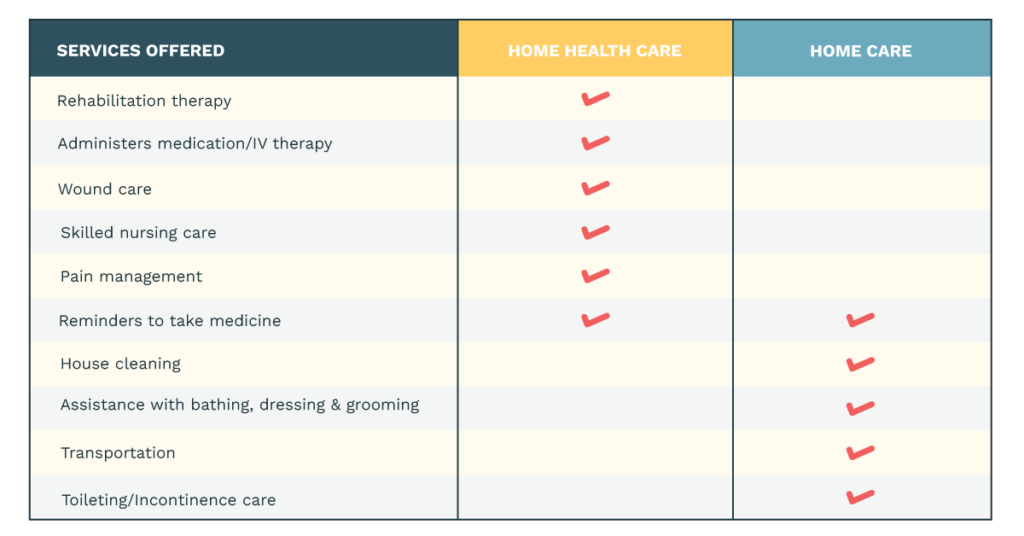
Home health services can include health monitoring, medical tests, medication administration, pain management and wound care. Although a home health care provider may offer some similar services as a home care provider, such as medication reminders, they will not deliver the same personal touch, social interactions or daily activity assistance as home care.

What Is Non-Medical Older Adult Care?

Home care usually refers to making life better for older adults as they age in whatever location they call home, including independent living facilities, apartments or houses. Home care is non-medical care and can include services like transporting the client, assisting with dressing and grooming, house cleaning and toileting assistance. Some people also refer to home care as a personal care service because caregivers will use a holistic approach to meet the client’s needs while helping with hygiene, medication reminders and other unique challenges.

Home care can be a long- or short-term service. For instance, home care may be a temporary need for someone recently released from the hospital. Home care can also provide valuable social interaction, making older adults feel more comfortable. 

Choosing Home Care or Home Health Care

Ultimately, choosing home care or home health care will depend on each client’s unique needs. If a client needs wound care, specialized therapies or medication administration, they will be more suitable for home health care. Meanwhile, older adults needing assistance navigating activities of daily life (ADLs) can benefit from home care. 

Chart of services for home health care versus senior home care

However, when choosing necessary services, you should also consider price. Although both types of care typically have an hourly rate, home health care services may be more expensive because the caregiver can administer licensed medical support. If an older adult needs or wants both types of care, it’s possible to create a more budget-friendly schedule that allows for each type of assistance. This way, the client can receive the medical attention they need from home while also accessing a supportive and dedicated caregiver to help them navigate daily activities.

Get Support at Home From Corewood Care

At Corewood Care, we tailor in-home care services to each client. Our home caregivers also help keep the client engaged during our visits with conversation and interaction. The term companion care refers to the more social side of home care — these clients perhaps do not need help with bathing or grooming but would benefit from someone to play cards with, reminisce with or engage in activities that keep the brain stimulated.

Corewood Care can provide the customized in-home care an older adult needs to feel comfortable while they rest, heal or navigate their homes. We’ve served clients across the region with home care services, respite care and 24/7 care for many years. If we can be of service, answer questions or help find the right service, please give us a call at 301-909-8117, schedule a free home assessment or use our chat.

Call Us: (301) 909-8117